
 Assistant

ISTP-OH
Considerate Explorer
Compares workable approaches and conditions before acting, while discussing the other person’s situation and cooperation needs.
An approach needs to fit the situation and the people involved
Even when a method looks workable, you may first want to check whether the materials are available and whether it is convenient for the person using it. You enjoy bringing practical conditions into alignment and hearing a partner explain what they find awkward.
ISTP-OH, the “Considerate Explorer,” tends to compare possible approaches and cooperation needs first. Being considerate does not mean having no opinion, and deliberation does not mean only watching. Once key conditions are understood, practice can still provide more information.
Explore together without rushing to decide for someone else
Cooking something new, trying a small model, or finding an easier walking route can all be interesting explorations. You might first look at the available approaches, then invite your partner to explain which better suits their actual habits.
A shared experience need not be finished as quickly as possible. One person wants to try it themselves; another only wants to see the result. Asking first preserves your interest in observation and comparison without making someone accept help they do not need.
What the ISTP base type and OH suffix each describe
In Type64, ISTP combines reflecting inwardly, attending to concrete experience and information on the spot, checking how things work through logic, and leaving room to adjust external arrangements. It does not require you to like particular equipment, be skilled at repairs, or work in a technical field.
ISTP-OH adds two further angles for observation: O (Observant): Focuses on comparing conditions, risks, and later effects before starting, then choosing an approach. H (Harmonious): Focuses on feelings, understanding, and shared participation. Valuing a relationship does not require agreeing with every opinion.
T concerns logic and consistent criteria in judgment; H/C concerns the focus of attention in interaction. P concerns room to adjust external arrangements; A/O concerns the order of processing before action. These are conceptual distinctions, not evidence that the dimensions are statistically independent. For the meanings of the codes, see Type64’s classification and personality codes.
Connecting through practical cooperation
You may be more accustomed to showing care through useful responses: helping someone identify where they are stuck, suggesting a small step to try, or adjusting your plans to make cooperation smoother. You may not express emotions at length, but notice whether the other person understands, wants to participate, or might feel embarrassed by the current approach.
When a friend complains about a setback at work, you may naturally start analyzing the workflow. A solution, however, may not be what they need right then. First ask, “Would you like me to stay and talk for a while, or shall we think through options together?” This keeps your practical support available without treating feelings as a fault that needs immediate repair.
Attending to relationships does not mean taking responsibility for everyone’s needs. If you quietly accept extra tasks to avoid disrupting the atmosphere, you can say clearly: “I can help check this part, but you will need to handle the follow-up communication yourself.” Practical responses and clear limits can coexist.
Make your reasoning visible during cooperation
Your group needs to deliver a demonstration by Friday, and you notice a compatibility issue in the current approach. You might first run a limited test, compare the risks of changing tools with keeping the original setup, then ask the person presenting which functions must stay and which can be simplified temporarily. This can help avoid a result that works technically but is awkward to use.
If you compare everything silently, however, others may mistake your quietness for a lack of progress. Repeatedly checking everyone’s opinion can also delay a decision. Share three short updates: what you have found, which information is still missing, and when the next step will be decided. Limit consultation to the people actually affected and a clear time frame.
After acting, briefly review which judgments were supported, which risks were overestimated, and whose input you should seek earlier next time. The review is not about assigning blame; it is about making the next judgment easier.
ISTP-OH and nearby combinations: change one angle at a time
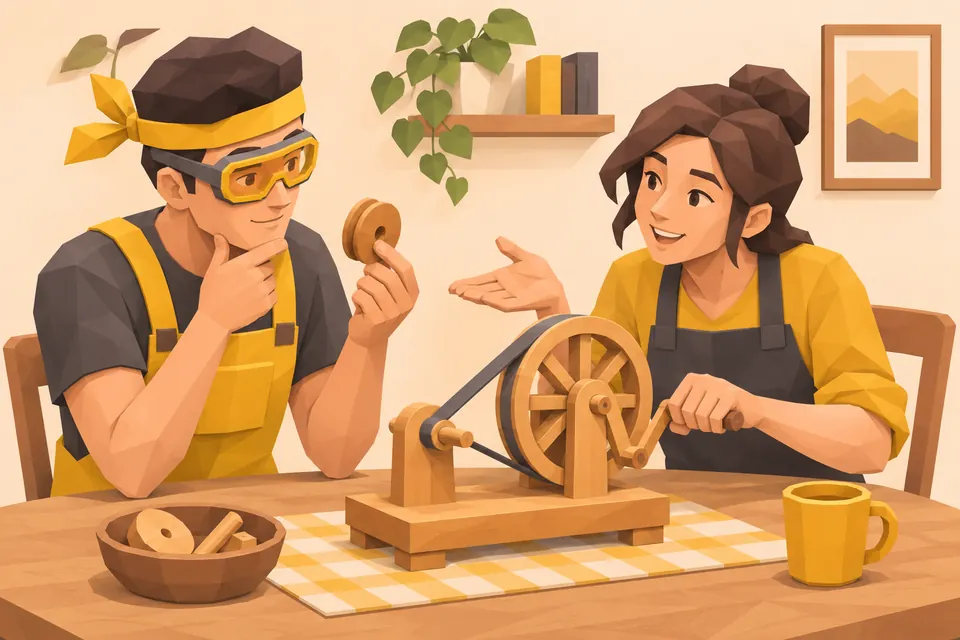
You and a friend are exploring how the parts of a small hand-cranked wooden-wheel toy connect. The base type and situation stay the same below; only one suffix changes at a time. This is not a ranking of ability, depth of care, or personality.
| Types | How the difference might appear in the same situation |
|---|---|
| ISTP-OH and ISTP-AH | ISTP-OH: First compares materials, connection options, and how their partner wants to participate, then chooses a reversible trial. ISTP-AH: Tries a connection already confirmed to be safe, asks where their partner finds it awkward to use, then adjusts it together. |
| ISTP-OH and ISTP-OC | ISTP-OH: First compares materials, connection options, and how their partner wants to participate, then chooses a reversible trial. ISTP-OC: First checks the variables, possible failures, and what they can take responsibility for; tests this connection once the conditions are clear. |
Keep base-type differences separate from suffixes
For the S/N difference with INTP, observe whether you tend to begin with objects, observed phenomena, and current conditions, or first organize conceptual relationships and possible explanations. For the J/P difference with ISTJ, consider whether you prefer to leave routes open for adjusting external tasks or establish a stable sequence first. Neither directly determines when you are ready to start; A/O separately concerns the rhythm of checking conditions.
Give comparison and understanding a clear next step
Before choosing an approach, collect two kinds of information: the limits of the object or situation, and the person’s explicitly stated needs as a user. Compare only options that actually affect these, and agree on a small trial. If the result differs from expectations, first check whether conditions changed rather than blaming someone’s cooperation.
Frequently asked questions
Does asking what someone needs undermine independent analysis?
It need not. The needs of the person using a solution are part of its conditions. You can still independently judge whether a method works and clearly reject unsafe or unworkable requests. Attending to feelings does not require giving up technical or factual standards.
Can one cautious, considerate action establish that I am OH?
No. A single action may reflect risk, duties, or politeness. Look across ordinary situations at what you naturally check first and how you establish the other person’s needs. Record counterexamples too, rather than deciding a type from one action.
Are 64 subdivisions more accurate than 16 base types?
More categories do not automatically make measurement more accurate. Suffixes add angles for observation; measurement support must be assessed separately through research and validation. For the scope of use, see Type64’s framework and limitations.
This page explains the combination using Type64’s current definitions. Situations and illustrations are examples, not predictions about every person or evidence of ability, career fit, or relationship outcomes. Having 64 subdivisions does not mean greater accuracy. For the scope and basis of the framework, see the framework explanation.


