
 Assistant

ISTP-AH
Flexible Helper
Observes a situation and tries limited practical steps relatively early, while noticing the other person’s difficulties and support needs.
First see where it gets stuck, then ask whether to try together
When someone is unsure how to use a small object, you may prefer to look closely at how it actually works rather than speculate at length. Finding a workable approach with someone you know can be satisfying in itself. Helping might mean simply passing a tool or explaining one step.
ISTP-AH, the “Flexible Helper,” tends to begin a limited trial relatively early while responding to the person’s needs. Wanting to help does not mean you should immediately take over. It is still important to acknowledge the limits of your familiarity with a task.
Discovering interests through firsthand experience
You might enjoy adjusting a connection in a model, trying a different cooking sequence, or noticing how an object is used while out walking. The interest can lie in understanding something firsthand. It need not produce an achievement every time, and you do not have to be naturally good at it.
When a partner joins in, let them try first and see where help is actually needed. Exploring together can be more enjoyable than finishing the task for them. Their wish to figure things out slowly is also a real condition to consider.
What the ISTP base type and AH suffix each describe
In Type64, ISTP combines reflecting inwardly, attending to concrete experience and information on the spot, checking how things work through logic, and leaving room to adjust external arrangements. It does not require you to like particular equipment, be skilled at repairs, or work in a technical field.
ISTP-AH adds two further angles for observation: A (Assertive): Focuses on starting when the information is sufficient for the next step, then adjusting through feedback from practice. H (Harmonious): Focuses on feelings, understanding, and shared participation. Valuing a relationship does not require agreeing with every opinion.
T concerns logic and consistent criteria in judgment; H/C concerns the focus of attention in interaction. P concerns room to adjust external arrangements; A/O concerns the order of processing before action. These are conceptual distinctions, not evidence that the dimensions are statistically independent. For the meanings of the codes, see Type64’s classification and personality codes.
Turning pressure on the spot into a next step
Just before a group presentation, the playback equipment has no sound. If you know the equipment and have permission to operate it, you might check the volume, connections, and backup playback options while your partners keep preparing the content. This combines firsthand observation with cooperation; it does not mean your type enables you to identify the cause.
Getting something running quickly is not the same as finding the root cause. Unless a temporary fix is explained, others may assume the problem is fully resolved. When safety, important data, or irreversible operations are involved, “give it a try” cannot be the default approach.
- Before acting, explain what you plan to change, what it might affect, and how to restore the previous state if it fails.
- Choose a small, reversible step first, and obtain the responsible person’s permission when needed.
- Leave a brief record afterward, distinguishing a temporary workaround from a resolved root cause.
Practical help can matter without taking over
If a friend is struggling to assemble furniture, you might check the instructions together and examine a step that can be adjusted safely, provided you have relevant experience and they want assistance. This is direct, visible support, especially when practical help is what they actually need.
The same approach may be less useful in a relationship difficulty. If a friend describes an argument with their partner and you immediately plan a conversation for them, they may feel their hurt has been skipped over. Attending to the relationship does not mean removing every unpleasant feeling, and being willing to help does not entitle you to decide for someone else.
First check what kind of help is wanted: “Would you like me to listen, think through options with you, or do something together?” During a practical task, you can also leave them a step they can complete. Support can increase their sense of control rather than create dependence.
ISTP-AH and nearby combinations: change one angle at a time
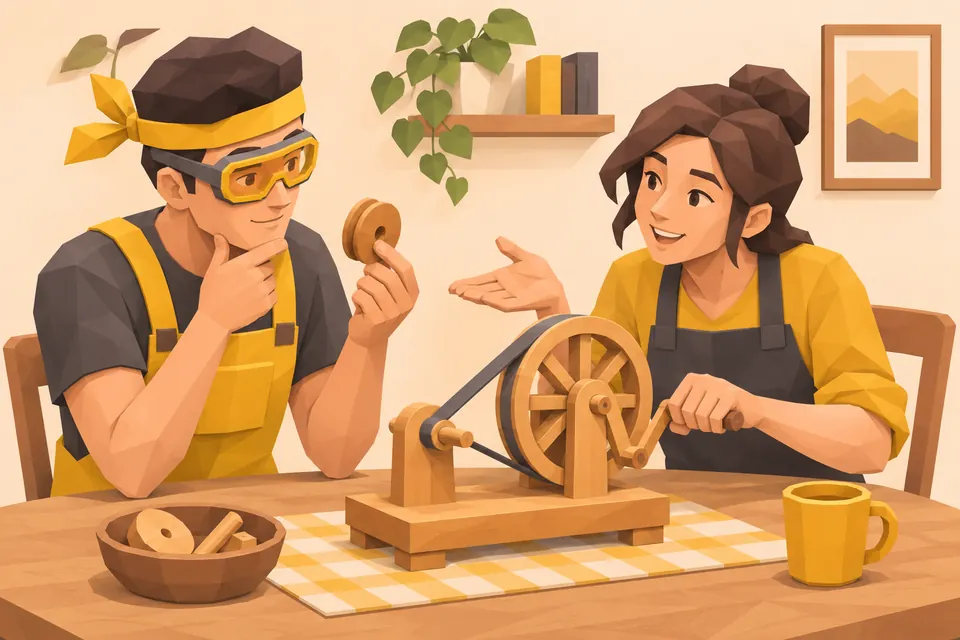
You and a friend are exploring how the parts of a small hand-cranked wooden-wheel toy connect. The base type and situation stay the same below; only one suffix changes at a time. This is not a ranking of ability, depth of care, or personality.
| Types | How the difference might appear in the same situation |
|---|---|
| ISTP-AH and ISTP-OH | ISTP-AH: Tries a connection already confirmed to be safe, asks where their partner finds it awkward to use, then adjusts it together. ISTP-OH: First compares materials, connection options, and how their partner wants to participate, then chooses a reversible trial. |
| ISTP-AH and ISTP-AC | ISTP-AH: Tries a connection already confirmed to be safe, asks where their partner finds it awkward to use, then adjusts it together. ISTP-AC: Independently tests one idea about a connection, explains which part this round will check, then shares the result for their partner to consider. |
Keep base-type differences separate from suffixes
For the S/N difference with INTP, observe whether you tend to begin with objects, observed phenomena, and current conditions, or first organize conceptual relationships and possible explanations. For the J/P difference with ISTJ, consider whether you prefer to leave routes open for adjusting external tasks or establish a stable sequence first. Neither directly determines when you are ready to start; A/O separately concerns the rhythm of checking conditions.
Even the same code cannot capture every experience. You can read why people of the same type still differ to distinguish preferences, experience, and current responsibilities.
Turn an offer of help into something you can observe
Next time you want to solve a small problem, first ask whether the person would prefer to try alone, try together, or have your help. Choose one safe, reversible change and record both whether it changes the result and whether they find it easier to use. Practical effects and the recipient’s experience both matter.
Frequently asked questions
Does being a Flexible Helper mean I should always be available?
No. H does not mean unlimited availability, and A does not mean handling every problem immediately. Explaining your available time, familiarity with the task, and what needs to be handed over is more responsible than accepting work beyond your capabilities out of kindness.
Why do people with the same ISTP-AH code enjoy different activities?
A code describes tendencies, not everyone’s list of interests. Experience, skills, culture, responsibilities, and energy all affect behavior. Compare motives, what you do before starting, and what you need in an interaction; people with the same combination need not do the same things.
Can letters from another site be converted directly into AH?
No. Even when the base code is the same, questions, dimension definitions, scoring, and suffixes can differ. Another site’s A/T cannot replace Type64’s A/O and H/C. Use the guide to comparing results across sites to check each element.
This page explains the combination using Type64’s current definitions. Situations and illustrations are examples, not predictions about every person or evidence of ability, career fit, or relationship outcomes. Having 64 subdivisions does not mean greater accuracy. For the scope and basis of the framework, see the framework explanation.


