
 Assistant

ISTP-OC
Careful Troubleshooter
Checks variables, risks, and the limits of personal responsibility before independently testing a practical approach.
First establish the conditions under which an approach works
Even when a problem seems to have an answer, you may wonder whether it will still work with a different material or in another situation. You enjoy connecting observations with their conditions and want to take responsibility for a part you genuinely understand.
ISTP-OC, the “Careful Troubleshooter,” combines prior checking with personal boundaries. The nickname guarantees neither measurement skills nor professional qualifications, and cautious experimentation cannot replace necessary safety requirements.
Quiet attention to detail is a form of involvement too
You might repeatedly observe a simple structure, compare the same movement under different conditions, or keep a short record of how you use your own belongings. An interest can be small and pursued simply for clearer understanding.
When a friend asks to draw on your experience, explain the conditions under which you tried something and what you still do not know. Avoiding universal claims based on limited experience preserves your independent judgment and lets others know what they need to check.
What the ISTP base type and OC suffix each describe
In Type64, ISTP combines reflecting inwardly, attending to concrete experience and information on the spot, checking how things work through logic, and leaving room to adjust external arrangements. It does not require you to like particular equipment, be skilled at repairs, or work in a technical field.
ISTP-OC adds two further angles for observation: O (Observant): Focuses on comparing conditions, risks, and later effects before starting, then choosing an approach. C (Calm): Focuses on independent judgment, personal space, and clear boundaries. Valuing boundaries does not mean lacking feelings or care.
T concerns logic and consistent criteria in judgment; H/C concerns the focus of attention in interaction. P concerns room to adjust external arrangements; A/O concerns the order of processing before action. These are conceptual distinctions, not evidence that the dimensions are statistically independent. For the meanings of the codes, see Type64’s classification and personality codes.
Make care as clear as the facts
At work, a colleague asks you to take over a project at short notice without handover notes. You may first ask about authorization, deadlines, and known risks before deciding how much to accept. This can prevent unclear responsibilities and make promises more credible. But if you only ask about conditions without acknowledging their pressure, they may think you do not want to help.
Respond on two levels: “I know you’re in a hurry. I can check the fault first, but I can’t take responsibility for the whole delivery today.” This acknowledges their situation while keeping a clear boundary. When someone close to you shares a worry, you can also ask, “Would you like help analyzing it, or would you prefer me to listen first?” A solution need not always be the first response.
ISTP-OC and nearby combinations: change one angle at a time
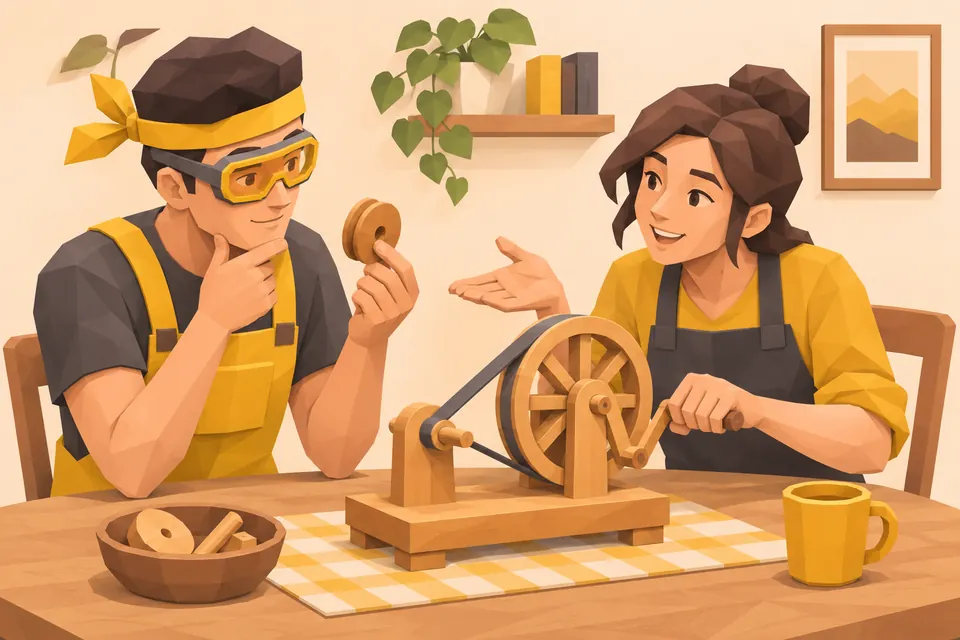
You and a friend are exploring how the parts of a small hand-cranked wooden-wheel toy connect. The base type and situation stay the same below; only one suffix changes at a time. This is not a ranking of ability, depth of care, or personality.
| Types | How the difference might appear in the same situation |
|---|---|
| ISTP-OC and ISTP-AC | ISTP-OC: First checks the variables, possible failures, and what they can take responsibility for; tests this connection once the conditions are clear. ISTP-AC: Independently tests one idea about a connection, explains which part this round will check, then shares the result for their partner to consider. |
| ISTP-OC and ISTP-OH | ISTP-OC: First checks the variables, possible failures, and what they can take responsibility for; tests this connection once the conditions are clear. ISTP-OH: First compares materials, connection options, and how their partner wants to participate, then chooses a reversible trial. |
Keep base-type differences separate from suffixes
For the S/N difference with INTP, observe whether you tend to begin with objects, observed phenomena, and current conditions, or first organize conceptual relationships and possible explanations. For the J/P difference with ISTJ, consider whether you prefer to leave routes open for adjusting external tasks or establish a stable sequence first. Neither directly determines when you are ready to start; A/O separately concerns the rhythm of checking conditions.
Even the same code cannot capture every experience. You can read why people of the same type still differ to distinguish preferences, experience, and current responsibilities.
Support judgment with concrete checks and limited experience
For a problem you have not acted on, write down the known conditions, the most important unknown, and an acceptable scope for testing. First check the unknowns that could change the result; leave the rest incomplete for now. If professional handling is needed, describe what you can observe rather than continuing to experiment on your own.
Frequently asked questions
Does lengthy assessment mean I cannot respond quickly?
You cannot infer that. O only describes a tendency to compare conditions first; actual speed also depends on experience, risk, and familiarity with the task. It is more useful to observe whether checking produces new information and whether you can make a provisional decision when conditions are sufficient than to label yourself fast or slow.
Must I determine my type again if I behave differently now?
First distinguish recent pressure, changes in experience, and task demands from ongoing preferences. One action need not trigger a new code. Record concrete choices over time, then check the definitions and the context in which you originally answered. A type description should not prevent you from adopting a more suitable approach.
Why do people with the same combination relate to others differently?
Suffixes do not remove differences in personal experience, values, communication skills, or real responsibilities. How someone explains a need for space and keeps agreements must be judged through their actual actions. C or O alone cannot tell you how close or reliable someone is.
This page explains the combination using Type64’s current definitions. Situations and illustrations are examples, not predictions about every person or evidence of ability, career fit, or relationship outcomes. Having 64 subdivisions does not mean greater accuracy. For the scope and basis of the framework, see the framework explanation.


