
 Assistant

ENTP-OH
Inclusive Explorer
Explores possibilities widely and listens to different views before looking for a more flexible approach.
Another explanation may reveal a condition you had missed
When two people disagree about whose plan is better, you may first want to clarify the conditions each assumes. You enjoy the moment when different views unexpectedly connect, and are willing to give unfinished ideas room to develop.
ENTP-OH, the “Inclusive Explorer,” tends to compare paths and consequences first while attending to how participants understand the discussion. Inclusion can improve the information available, but does not make all views equally well founded or require you to avoid choosing forever.
Give the exchange of ideas both room and a point to reach
You might enjoy retelling a story from another perspective, discussing how friends would choose under different living conditions, or comparing ways to start an interest. A turn in the discussion can be more interesting than immediately finding a standard answer.
If a companion feels there is too much analysis, ask whether they want to keep exploring or make a decision soon. They may need a workable arrangement now rather than more possibilities. Knowing what the discussion is for helps your questions contribute instead of simply prolonging the conversation.
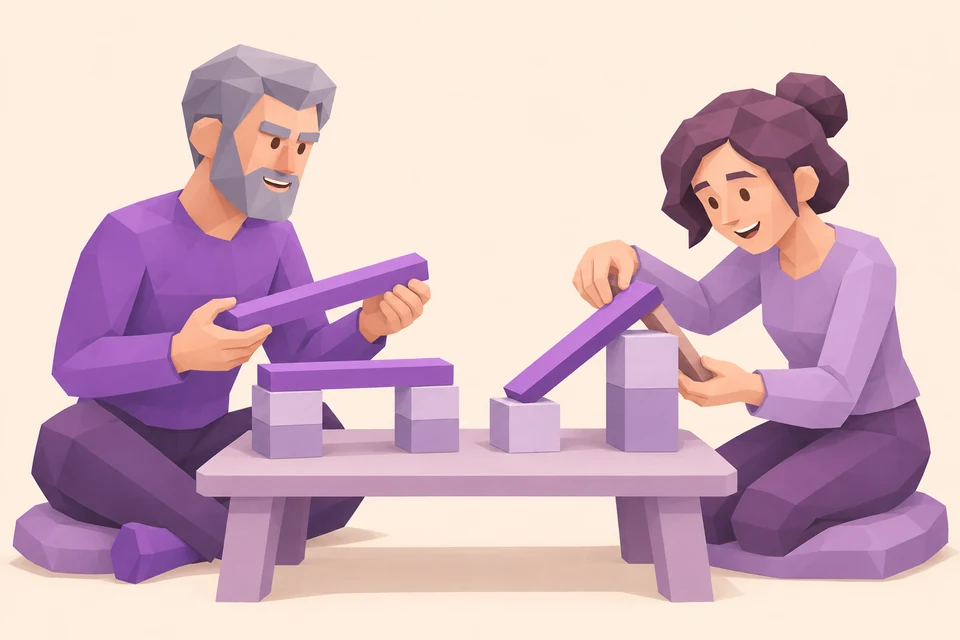
What do the ENTP basic type and OH suffix describe?
In Type64, ENTP describes developing ideas through interaction, noticing new connections and possibilities, testing views for logic and explanatory value, and keeping room to adjust external arrangements. Enjoying a different way of framing a problem does not mean always having to disagree with others.
ENTP-OH adds two angles for observation: O (Observant) emphasizes comparing conditions, risks, and possible consequences before choosing a course of action; H (Harmonious) emphasizes feelings, mutual understanding, and shared participation. Attending to relationships does not require agreeing with every opinion.
T concerns logic and consistent criteria in judgment, while H/C concerns priorities in interaction. P concerns flexibility in external arrangements, while A/O concerns the steps leading into action. These conceptual distinctions do not establish statistical independence between the dimensions. For code definitions, see Type64's classification and personality codes.
In a meeting, turn different positions into conditions you can compare
Suppose a team is considering a new service. Some people want to launch immediately; others worry about ongoing support costs. You might ask, “Are we concerned about insufficient demand or insufficient delivery capacity?” before outlining a limited trial, a phased launch, or a delay. You can also invite a quiet colleague responsible for delivery to explain practical constraints.
This can turn a clash of positions into specific questions and bring overlooked information into the decision. But if every comment generates another proposal, the discussion may keep expanding until participants no longer know what to do.
Before discussing, agree on a decision time and three criteria, such as investment, speed of testing, and ongoing workload. At the end, record the chosen path, why alternatives are not being used for now, and what new information would justify reopening the decision. Bring thinking to a decision rather than leaving only more possibilities.
Understanding someone does not mean analyzing them immediately
When a friend describes an argument with a colleague, you may quickly imagine several explanations: unclear responsibilities, a misunderstanding, or different expectations. You might reconstruct each person’s circumstances and look for a way forward without a complete breakdown in relations. This can help someone move beyond an all-or-nothing judgment, but a person who is hurting may feel that you are rushing to defend the other side.
What is easily missed is not necessarily the feeling itself, but the order of response: even a thorough analysis may not be the support needed right now.
First respond specifically: “You put real preparation into this and did not feel heard. That sounds frustrating.” Then ask whether they want you to listen or work through options together. Keep principles in view as you coordinate: understanding a motive does not mean approving the behavior, and maintaining a relationship does not require accepting unreasonable demands.
ENTP-OH and neighboring combinations: change one dimension at a time
You and your friends are trying changes to the rules of a board game. The comparisons below keep the basic type and situation the same, changing only one suffix dimension at a time. They do not rank ability, how much someone cares, or the value of a personality.
| Types | The difference in the same situation |
|---|---|
| ENTP-OH and ENTP-AH | ENTP-OH: First compares several changes and participants' concerns, then chooses a version everyone is willing to try. ENTP-AH: Proposes one round with new rules, inviting everyone to say what they enjoy and what they do not want to continue. |
| ENTP-OH and ENTP-OC | ENTP-OH: First compares several changes and participants' concerns, then chooses a version everyone is willing to try. ENTP-OC: Independently unpacks the rules' assumptions, conditions in which they fail, and each person's authority, checking these before deciding which change to try. |
Distinguish basic types before comparing suffixes
When comparing with ENFP, a T/F clue is whether you tend to start by checking the internal consistency of an idea or by considering values and its impact on people; enthusiasm does not distinguish them. When comparing with INTP, notice whether you more naturally develop ideas through discussion or work them through internally before sharing them. People with either preference may need both time alone and companionship.
Give comparison and understanding a clear outcome
Choose a topic that is expanding in several directions and agree on the one question this round should answer. Organize the different views into two conditions that genuinely affect the choice, then set a decision time. If a small test can answer a remaining question, move the discussion into practice.
Frequently asked questions
Will understanding many positions leave me without a view of my own?
Understanding and agreeing are different. Explain which information you have accepted, which inference you still reject, and what evidence would change your judgment. A provisional position helps later discussion more than pretending everyone already agrees.
Can one cautious, considerate action establish that I am OH?
No. A single action may reflect risk, responsibility, or politeness. Look across ordinary situations at what you naturally check first and how you establish what someone needs. Record counterexamples too; do not determine a type from one incident.
Are 64 categories more accurate than 16 basic types?
More categories do not automatically make measurement more accurate. Suffixes offer additional angles for observation; support for measurement must be assessed separately through research and validation. For the scope of use, see the Type64 framework and its limitations.
This article explains the combination using Type64's current definitions. The situations and illustration are examples, not predictions about every individual or evidence of ability, career suitability, or relationship outcomes. Having 64 categories does not mean greater accuracy. For the scope of use and evidence boundaries, see the Type64 framework and its limitations.


