
 Assistant

ESFJ-AH
Enthusiastic Organizer
Notices practical needs in the group, starts concrete action early, and attends to participants’ feelings through responsiveness and cooperation.
A clear plan for getting together can make room for care
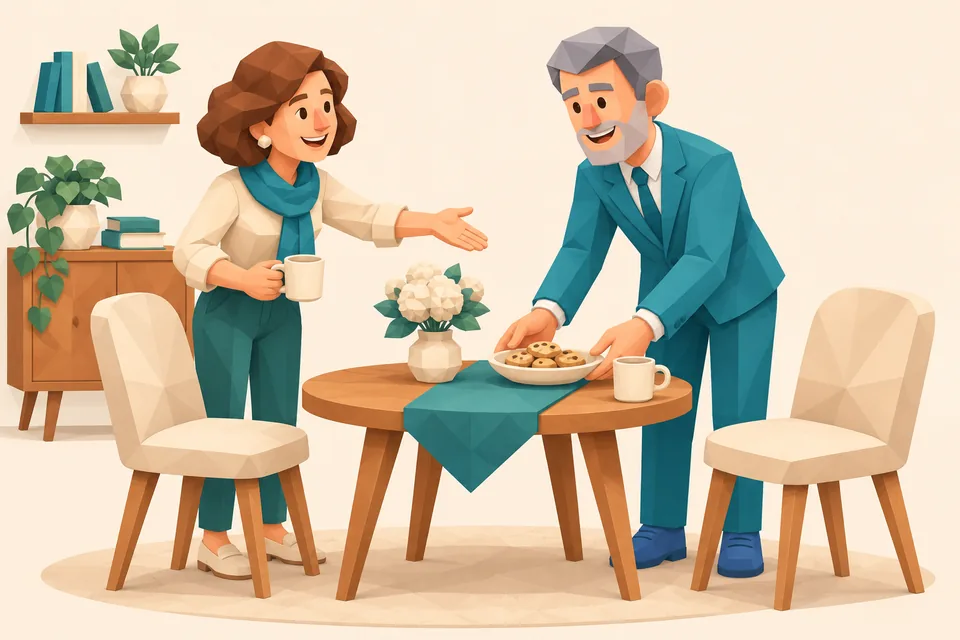
When someone joins a gathering for the first time, you may think of showing them where to sit or which snack might suit their preferences. You enjoy everyday moments when people connect and respond to one another and are willing to begin with an invitation that is easy to accept.
ESFJ-AH, the “Enthusiastic Organizer,” tends to put arrangements into action early while noticing whether people feel at ease. Enthusiasm does not require constant effort, and organizing should leave room to decline or participate differently.
Small shared rituals can bring connection to everyday life
Having tea together, exchanging a home-cooking idea, or remembering to ask how someone is on a particular day may bring a sense of lasting warmth. Getting together can be simple; it need not involve elaborate preparation or satisfy everyone every time.
If you lack energy today, you can let a companion choose the place or prepare drinks and simply bring your own experiences to the conversation. Care can flow both ways; the person who first extends an invitation need not keep everything going.
What do the ESFJ base and AH suffix each describe?
Here, ESFJ combines engagement with others, attention to concrete experiences and circumstances, consideration of values and effects on people, and a preference for clear arrangements in shared life. It does not require you to enjoy every gathering or take responsibility for care or the atmosphere.
ESFJ-AH adds two perspectives for observation: A (Assertive): Focuses on starting when information is usable enough for the next step, then adjusting through practical feedback. H (Harmonious): Attends to feelings, understanding, and shared participation. Caring about a relationship does not require agreeing with every opinion.
F concerns values and effects on people in judgment; H/C concerns the focus of attention in interaction. J concerns the structure of external arrangements, while A/O concerns the order of processing before action. These are conceptual distinctions, not evidence that the dimensions are statistically independent. For the letter meanings, see Type64’s classification and personality codes.
Clarify specific needs, then arrange the parts people want to join
For example, a team receives a last-minute task, but the division of work is still unclear. You may list what needs doing, ask who can take each part, and offer a specific starting point to a colleague struggling to keep up. This can get collaboration underway and help people see how they can contribute.
This approach can turn vague needs into action and make participation easier. Its limit is that the help you think someone needs may not be what they want. Quick allocation of tasks may also leave someone who has not spoken feeling that the decision has already been made for them. Asking “Would you like to take this part?” is safer than assuming agreement.
Caring about the atmosphere need not mean taking over everyone’s feelings
At a meal with friends, you may steer the conversation toward a quiet person’s familiar interests or privately ask whether they need help. This response can make it easier for someone overlooked to join in. But they may simply want to sit quietly for a while; the gathering need not be changed on their behalf.
When people do not respond to your efforts, you may feel like doing more to restore a familiar sense of connection. Ask whether they have actually expressed a need, or whether you are taking responsibility for everyone having to be happy. An invitation can be warm while remaining easy to decline or leave.
Care can mean actively offering choices rather than deciding for someone what being cared for should look like.
ESFJ-AH and neighboring combinations: change one perspective at a time
You and your companions are considering a small, shared tea break. The comparisons keep the base type and situation the same, changing only one suffix letter. They do not rank ability, degree of care, or personality.
| Codes | How the difference might appear in the same situation |
|---|---|
| ESFJ-AH and ESFJ-OH | ESFJ-AH: First arranges an easy-to-join tea break, asks about seating, preferences, and willingness to take part, then adjusts to the responses. ESFJ-OH: First compares frequency, budget, and everyone’s availability, then discusses a trial arrangement that can be sustained. |
| ESFJ-AH and ESFJ-AC | ESFJ-AH: First arranges an easy-to-join tea break, asks about seating, preferences, and willingness to take part, then adjusts to the responses. ESFJ-AC: Starts with one session, states which preparations they will handle and when they will finish, and leaves others free to volunteer for the rest. |
Consider base-type differences separately from the suffixes
For the S/N difference with ENFJ, consider whether, when welcoming someone, you first notice immediate information and practical support or think ahead to possibilities for long-term development. For the T/F difference with ESTJ, consider whether choices first draw on values and effects on people or on logic and consistent criteria. Both approaches can involve rules and care.
The same code cannot sum up every experience. Read why people with the same type can still differ to distinguish preferences, experience, and current responsibilities.
Turn one initiative into an experience you can observe
Next time you organize a small gathering, propose a limited version and ask who would like to join or make changes. Leave unclaimed tasks unclaimed rather than automatically taking them on. Listening to real feedback afterward may reveal what people value more clearly than adding further preparation.
Frequently asked questions
If someone does not come, does that mean I failed to look after everyone?
You cannot infer that. Time, energy, and personal interests all affect participation. You can ask about practical difficulties while respecting a wish not to attend. One refusal is not a complete assessment of your care or the relationship.
Why do people with the same ESFJ-AH code enjoy different activities?
A code describes tendencies, not an inventory of everyone’s interests. Experience, skills, culture, responsibilities, and energy all affect behavior. Consider motivations, the order of processing before starting, and interaction needs; people with the same combination need not do the same things.
Can another site’s letters be converted directly into AH?
No. Even with the same base code, questions, dimension definitions, scoring, and suffixes may differ. Another site’s A/T does not replace A/O and H/C here. Compare them item by item using the guide to comparing results across sites.
This article explains the combination using Type64’s current definitions. Situations and illustrations are explanatory, not predictions about every individual or evidence of ability, career fit, or relationship outcomes. Having 64 subdivisions does not mean greater accuracy. For the scope and basis, see the framework explanation.


